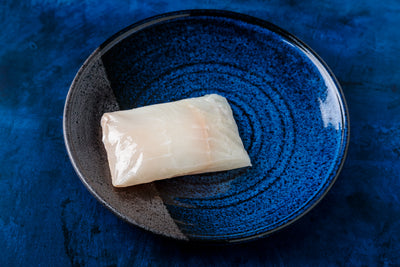
Both salmon and halibut are popular protein choices among seafood enthusiasts. They’re packed with health benefits, tender and delicious, and available in most markets. However, when you’re faced with the choice between halibut vs. salmon, it can be challenging to pick one.
The good news is that we can help make your decision easier by outlining their differences in depth. Learn how halibut and salmon differ in physical appearance, habitat, taste, and other factors in our comprehensive guide.
What’s the Difference Between Halibut and Salmon?
Here’s a quick overview of the differences between halibut and salmon:
| Halibut | Salmon | |
| Physical Appearance | Flatfish with a diamond-shaped body | Streamlined, elongated body with touches of pink |
| Habitat | Deep, muddy waters and ocean floors | Born in freshwater rivers and migrate to the sea |
| Size | Larger, growing up to 8 feet and several hundred pounds | Smaller, growing only 2 to 4 feet |
| Lifespan | Can live over 40 years | Live only between 2 and 7 years |
| Nutrition | Higher in protein and micronutrients | Rich in omega-3 fatty acids |
| Taste | Milder, like tilapia | Richer and butterier because of higher fat content |
| Price | Slightly more expensive because of sustainability restrictions | Generally cheaper because of high availability |
Physical Appearance
Halibut, a flatfish, boasts a distinct diamond-shaped body, with both eyes on the upper side. Their coloration typically ranges from dark brown to olive green on the upper side and white on the underside.
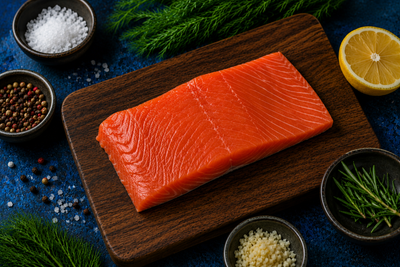
Conversely, salmon possesses a streamlined, elongated body with a signature silver hue, often tinged with pink, orange, or red, particularly during spawning seasons. Salmon's torpedo-like shape and sleek, silver-scaled appearance differentiate it from the diamond-shaped, flat-bodied halibut.

Habitat
Halibut are primarily found in deep, cold waters along the ocean floor, dwelling at various depths, often ranging from shallow coastal areas to depths of over 1,500 feet. They favor sandy or muddy bottoms where they camouflage themselves due to their coloration and feed on smaller fish and crustaceans.
On the other hand, salmon species usually spend the initial portion of their lives in freshwater rivers and streams before migrating to the ocean. During their oceanic phase, they thrive in coastal and offshore waters, traveling great distances and returning to their natal rivers to spawn. These anadromous fish typically seek gravelly riverbeds for spawning, where they lay their eggs before completing their life cycle by returning to the ocean or, in some cases, perishing after spawning.
Size
Generally, halibut tend to grow larger than salmon. Halibut, known for its substantial dimensions, can grow up to eight feet and several hundred pounds.
Related: World Record Halibut: The Largest Halibut Ever Caught
By comparison, king salmon grow only about four feet and 100 pounds, while others, such as pink salmon, are notably smaller, typically measuring around 1.5 feet and weighing roughly 3 to 5 pounds.
Lifespan
Halibut are relatively long-lived fish, with some species having the potential to reach several decades in age. Certain types of halibut, like the Pacific halibut, can live for over 40 years.
Salmon have shorter lifespans, roughly 2 to 7 years. Most spend this time in the sea, returning to their natal rivers to span. Once they spawn, they die within a few weeks.
Related: Alaskan Salmon Life Cycle
Nutrition
Halibut and salmon boast an impressive range of health benefits, though salmon typically offers more calories than the former. If weight loss is part of your health goals, salmon may be the way to go.
However, salmon offers more high-quality protein than halibut, which can help build muscle mass, increase fullness, and improve metabolism. It’s also jam-packed with omega-3 fatty acids, which benefits heart, skin, and joint health.
Halibut is richer in micronutrients than salmon, containing higher levels of niacin, phosphorus, and magnesium, which aid in balancing high blood pressure, improving bone health, and stabilizing moods.
Taste
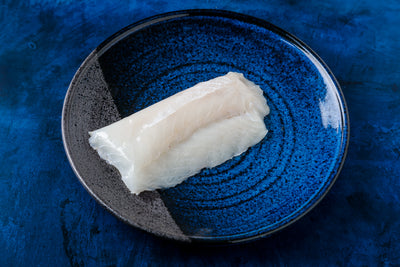
Halibut, a lean and mild-tasting fish, boasts a delicate, sweet flavor with a slightly firm and flaky texture. Its taste is often described as clean and slightly buttery, and it’s often likened to tilapia.
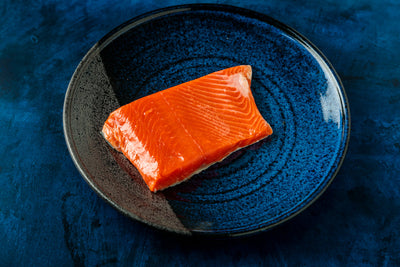
On the other hand, salmon, an oily fish, has a richer and more pronounced flavor profile. Its flesh is oilier, giving it a distinct and flavorful taste with a buttery texture. Many describe its taste as “intense” because of its higher fat content.
Price
Halibut tends to be more expensive than salmon, primarily because of its limited availability, slower growth rate, and the challenges of catching it. Additionally, halibut fisheries are managed to sustainably control the population, which can affect the supply and, subsequently, the price.
Related: Factors Affecting Halibut Price Per Pound
Salmon, while also available in various species and qualities, is more widely farmed and available year-round, which generally keeps its price lower than halibut. The price discrepancy can also vary based on the specific type of salmon, with wild-caught or specialty salmon often being more expensive than farmed varieties.
Summary
Now that you know the differences between mild, protein-packed halibut and rich, buttery salmon, you can start concocting the best recipes in your home kitchen.
If you’re looking for the best source for both fish, we ship wild Alaskan halibut and wild caught Alaskan sockeye salmon directly to your doorstep!