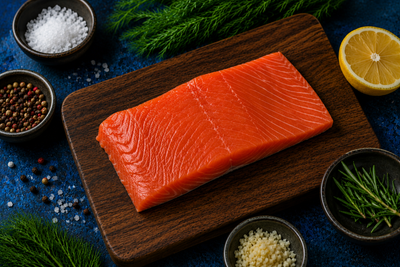
I’ve spent most of my life around fish. I have caught them early in the morning, cleaned them, sold them, and later cooked them for myself and others at home. You would think that kind of experience would have made me an expert from the start. It did not.
When it came to salmon, I still overcooked it more times than I care to admit. I remember pulling fillets off the heat a little too late because I thought the center still looked slightly underdone.
By the time I served it, the flesh had turned dry and tight. Other times, I got nervous and pulled it too early, and the center would stay softer than I wanted.
Over time, I learned something simple but important. Salmon does not respond well to guessing. Temperature matters more than instinct, and it is the only way I have found to make it consistent.
Why Salmon's Internal Temperature Matter
Salmon isn’t like tougher cuts of meat, where you can get away with guesswork. Its texture depends on how heat affects its proteins and fats.
As the internal temperature rises, the muscle fibers firm up and the fat softens. In the right range, this creates a tender, flaky texture that still feels moist.
Go a few degrees higher, and the proteins tighten too much and push out moisture. You may even see white albumin on the surface, which is a sign the fish is drying out.
That is why even a small temperature difference matters. It controls how much moisture stays in the fish and how the texture turns out, which is something timing alone cannot do.
What is the Ideal Internal Temperature for Salmon?
I’ve talked to a chef friend about this and also looked into USDA guidelines, and the difference comes down to priority. The USDA recommends 145°F (63°C), opens in a new tab because they’re focused on food safety, especially for vulnerable groups. It’s about instant-kill temperatures, not texture or taste.
Chefs, on the other hand, are cooking for quality — how the salmon feels and tastes when you eat it.
The safe minimum of 145°F (63°C) gives you peace of mind. The fish is fully cooked, firm, and opaque throughout, but it can also be a bit dry if you’re not careful.
For me, the best eating temperature is 125°F–130°F (52°C–54°C). This is where salmon is still moist, tender, and slightly silky in the center. It’s the point where flavor and texture really come through. It’s also the range you’ll hear a lot of chefs stand by.
If you want something in between, 135°F–140°F (57°C–60°C) is a good middle ground. The salmon is fully cooked, but still holding onto some juiciness.
Here’s a quick reference for doneness:
- Rare: 120°F (very soft, slightly translucent center)
- Medium: 125°F–130°F (moist, tender, my go-to)
- Medium-well: 135°F–140°F (fully cooked, still some juiciness)
- Well-done: 145°F+ (firm, fully opaque, safest but can be dry)
That said, I’ve learned there’s no single “right” answer that works for everyone. Some people feel more comfortable sticking with the USDA’s guidance, while others prefer the softer, more tender texture you get at lower temperatures. It really comes down to what matters most to you.
Salmon Cooking Temperatures By Method
There’s no one-size-fits-all temperature when it comes to how you cook it. Not because the final internal temp changes, but because each method delivers heat differently — some fast and aggressive, others slow and even. That changes when I pull the fish, not just what number I’m aiming for.
Here’s how that’s played out for me:
Oven-Baked Salmon Internal Temp
Oven baking is the most forgiving method I’ve used.
The heat surrounds the fish evenly, which means it cooks more gently and predictably. I usually set the oven to 375°F–400°F and pull the salmon right around 125°F–130°F.
What I like about this method is the control. It’s steady. If I’m cooking for family or don’t want to risk overcooking, this is where I go.
You get evenly cooked salmon from edge to center, without that overcooked outer layer and undercooked middle you sometimes get with higher, direct heat methods.
Pan-Seared Salmon Internal Temp
A lot of people don’t always think about temperature when pan-searing salmon. As long as the outside looks golden and the fish flakes, it feels “done.” I used to cook it that way too.
But if you’re after that restaurant-quality result — crispy on the outside, tender on the inside, and cooked fast — don’t wait until it looks fully done.
I usually pull it off the heat earlier, around 120°F–125°F, because the residual heat from the pan keeps cooking it even after it’s off. If you wait too long, that carryover heat can push it straight into overcooked territory.
Grilled Salmon Internal Temp
Out on the grill, you’re dealing with open flames, hot spots, and heat that isn’t always consistent.
Early on, I treated it like pan-searing. I left it on too long, trusted the look of it, and ended up drying out more salmon than I’d like to admit.
Now I approach it differently. I still aim for that same 125°F–130°F range, but I manage the heat more intentionally. I’ll usually start it over direct heat to get a bit of char, then move it to a cooler side of the grill to finish more gently.
Once I started moving the fish instead of leaving it in one spot, my results got a lot more consistent.
Air Fryer Salmon Internal Temp
Air fryer cooking is fast. And because the heat circulates, it’s pretty even.
I would recommend keeping an eye on the internal temp and pulling it around 125°F–130°F, especially since it can go from perfect to overdone pretty quickly.
One quick tip that helped me: start checking earlier than you think, especially with thinner fillets. The air fryer builds heat fast, and a minute or two can make the difference.
Quick Salmon Temperature Cheat Sheet (Save This)
If you just want something simple to come back to, this is what I personally use:
- Oven-baked: 125°F–130°F
- Pan-seared: 120°F–125°F (finishes with carryover heat)
- Grilled: 125°F–130°F (manage direct vs indirect heat)
- Air fryer: 125°F–130°F (check early, cooks fast)
To actually hit these temperatures consistently, I rely on a digital instant-read thermometer. Just insert it into the thickest part of the fillet and check.

Salmon Internal Temp vs. Visual Doneness (When You Don’t Have a Thermometer)
The best way to get this right, every single time, is to use a thermometer and aim for 125°F–130°F if you want that moist, tender result. That’s still my go-to.
But when I don’t have one, here’s what I rely on:
- Flake test: Gently press a fork into the thickest part and twist slightly. The salmon should separate into flakes easily but still look moist. If it falls apart dry, it’s likely overcooked. If it doesn’t separate, it needs more time.
- Color change: Look for salmon that’s mostly opaque on the outside with a slightly translucent center. Fully opaque all the way through usually means it’s closer to well-done.
- Finger press method: Lightly press the top of the fillet. It should give slightly with some bounce. Too firm usually means overcooked, while too soft may mean it’s underdone. This one takes practice and isn’t as reliable as the others.
How Thickness Changes the Right Cooking Temp
Not all salmon fillets cook the same.
A 1-inch fillet and a 2-inch cut might both end at the same internal temperature, but they get there in completely different ways.
A 2-inch cut, on the other hand, takes longer and holds a temperature gradient. The outside can look fully cooked while the center is still catching up. That’s why thicker cuts may need lower, more controlled heat or a finishing step like resting or indirect heat on the grill.
The key thing I always remind myself is this:
The target temperature stays the same, but the timing changes. I’m still aiming for that 125°F–130°F sweet spot, but I adjust how long I leave it on the heat depending on thickness.
And once you start noticing this, you can actually use it to your advantage. Instead of guessing or relying on the clock, you start reading the fish itself.
Kyle’s Tips for Perfect Salmon Every Time
This is where I try to find a balance between what chefs prioritize (texture and precision) and what the USDA focuses on (strict food safety).
These are the small habits that have saved me from a lot of overcooked or inconsistent salmon over the years:
Bring salmon to room temp before cooking
Cold salmon straight from the fridge cooks unevenly. Letting it sit for a short time before cooking helps it heat more consistently from edge to center, which makes it easier to land in that sweet spot.
I usually let it sit on a clean plate or cutting board on the counter, loosely covered, for about 15–20 minutes before cooking. You don’t want it fully warmed through, just enough to take the harsh chill off, so the inside and outside start closer in temperature.
Use a thermometer
This is the biggest game-changer. I check the salmon's internal temperature before removing the salmon from the heat source.
This lines up with what the USDA recommends for safe cooking practice: measuring internal temperature in the thickest part of the food to ensure it’s properly cooked and safe to eat, rather than relying on visual cues alone.
Resting time after cooking
Once it’s off the heat, I let it rest for a few minutes. This is because salmon doesn’t stop cooking immediately when you remove it from the pan or oven.
That leftover heat (what chefs often call carryover cooking) keeps gently raising the internal temperature for a short time. It also gives the juices time to redistribute. If you cut into it right away, a lot of that moisture ends up on the plate.
And yes, this is absolutely something chefs do. It’s a standard step in professional kitchens, not just for salmon but for most proteins.
Summary
Overcooked fillets, undercooked centers, and plenty of times where I thought I was doing everything right taught me that consistency doesn’t come from guessing.
If there’s one takeaway from all of this, it’s that you don’t need to rely on instinct alone. You can actually control the outcome and still leave room for how you personally like your salmon cooked. Temperature is what brings consistency to every cook.
Feel free to come back to this guide anytime you need a quick reference!