It’s no secret that fish makes a wonderful addition to your meal plan. Whether you’re following a pescatarian diet or simply aiming for variety, tuna and salmon are both excellent choices. They’re renowned for their nutritional value and versatility in the kitchen.
However, you might wonder how they compare and whether one is a better option. Besides their health benefits, tuna and salmon differ in physical characteristics, habitat, taste, and culinary uses.
In this article, we’ll take a closer look at these factors to help you decide which fish might be the best fit for your diet and lifestyle — or guests, in case you’re planning to serve fish at your dinner party.
What’s the Difference Between Tuna and Salmon?
Here, we’ll break down the key differences between tuna and salmon. We've also provided a table below to help you make a quick comparison:
| Tuna | Salmon | |
| Physical Characteristics | Generally larger with elongated bodies, metallic blue to silver coloration, and has long and angular fins. | Smaller and more robust body, silvery-blue to greenish-blue color and fins are more rounded. |
| Habitat | Warm and temperate waters worldwide, including the Atlantic, Pacific, and Indian Oceans. | Anadromous — part of their life cycle is in the ocean and part is in freshwater |
| Life Cycle | Breed annually, usually in the summer. | Spawning may occur in spring, summer, fall, or winter depending on the salmon species. |
| Nutrition | Relatively low in fat and an excellent source of lean protein. | High in omega-3 fatty acids, vitamin D, and B vitamins |
| Taste | Slightly meaty flavor. | Buttery and slightly sweet. The specific salmon variety, diet, and habitat may result in different tastes. |
| Culinary Uses | Has a firm texture that lends itself well to different cooking methods and recipes. | Its rich texture and buttery flavor make it versatile — it’s a delicious addition to any recipe. |
Physical Characteristics
Tuna are generally larger with elongated bodies built for fast swimming. They have metallic blue to silver coloration, sometimes with spots or stripes along their sides. Moreover, their fins are long and angular.
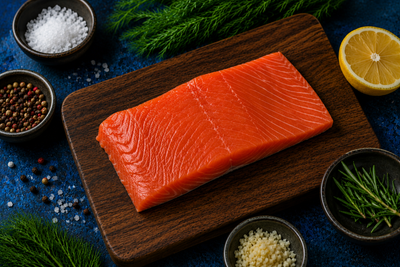
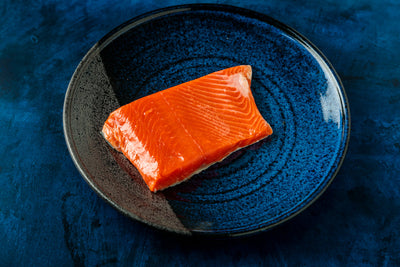
Salmon, on the other hand, is smaller and has a more robust body shape. They typically have a silvery-blue to greenish-blue color with prominent black spots on their upper half. Salmon fins are also more rounded compared to tuna. Males develop bright red or orange hues during spawning.

Habitat
Tuna are primarily oceanic fish found in warm and temperate waters worldwide, including the Atlantic, Pacific, and Indian Oceans. They prefer deep, open habitats where they can roam freely and hunt for prey like smaller fish and squid.
Salmon, on the other hand, are anadromous fish — meaning, they live part of their life cycle in the ocean (typically 1-4 years) and part in freshwater rivers and streams (to spawn). After spawning, adult salmon often die, while the young salmon (called smolts) migrate back out to the ocean.
Life Cycle
Tuna reproduce through external fertilization, where females release eggs and males release sperm into the water. Tuna larvae hatch from these fertilized eggs and grow rapidly, feeding on plankton. Breeding usually happens annually, in the summer.
As they mature, tuna undergo extensive migrations across oceans in search of prey and suitable spawning grounds. Some tuna species, like bluefin tuna, are capable of diving to great depths and can travel thousands of miles during their lifetimes.
Salmon have a more complex life cycle that includes both freshwater and saltwater stages. They are born in freshwater streams and rivers where females lay their eggs in gravel nests. After hatching, salmon spend their early years in freshwater environments feeding on insects and small fish. When they reach a certain stage of development, they migrate downstream to coastal and oceanic waters to feed and grow.
When it's time to spawn, adult salmon migrate back to their natal freshwater streams using their keen sense of smell and other sensory cues. This homing behavior helps them return to the exact location where they were born to reproduce. After spawning, most salmon die.
The timing of spawning can vary widely among species and can occur in spring, summer, fall, or winter, depending on the specific salmon species.
Nutrition
Salmon is particularly rich in omega-3 fatty acids (EPA and DHA), which are essential for heart health. It’s also an excellent source of vitamin D and provides significant amounts of B vitamins, especially B12 and B6, and minerals like selenium and potassium.
These nutrients are responsible for the health benefits of salmon, such as immune system support, improved memory, and better mood.
When comparing salmon and tuna in terms of fat content, salmon is generally the fattier fish. Tuna does contain omega-3 fatty acids, although the levels are lower than those found in salmon. If you’re seeking a protein source with lower amounts of fat, tuna would be a good choice.
Taste
Tuna is known for its mild and slightly meaty flavor, with a clean taste that is often described as fresh and straightforward. Its texture is firm and dense, which makes it suitable for various cooking methods from grilling to raw preparations like sushi.
Those who prefer fish with a buttery, slightly sweet, and delicate taste will appreciate salmon. It’s important to note that the taste of salmon may vary depending on the species (e.g., Chinook, Sockeye, or Coho) and whether the salmon is wild-caught or farmed.
Culinary Uses
The firm, steak-like texture of tuna makes it suitable for grilling, searing, and even raw preparations like sashimi. You can create grilled tuna steaks, burgers (using ground tuna formed into patties), or baked tuna with various seasonings and herbs.
Salmon, with its rich texture and pronounced flavor, can be cooked in many ways. When smoked, salmon’s buttery texture is intensified. Feel free to bake, poach, or pan-sear salmon, or incorporate it into salads and pasta dishes. It is also enjoyed raw in sushi or sashimi!
Summary
In most cases, people choose between tuna and salmon based on their taste preferences and preferred dishes. Exploring their unique characteristics can enhance your appreciation of these fish.
Ready to experience the exceptional taste of premium salmon? Order our wild caught sockeye salmon today.