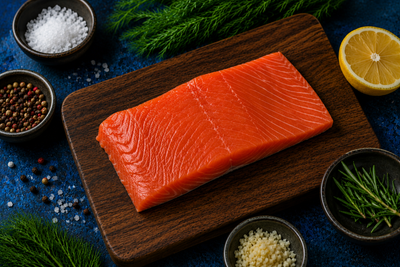
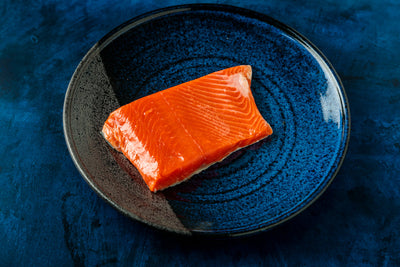
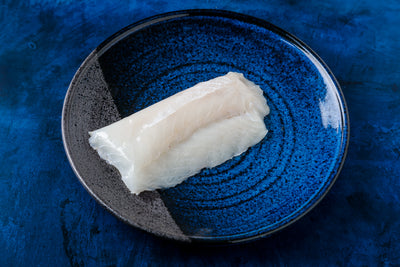
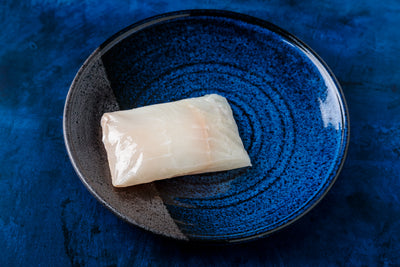
The term sushi grade salmon has become a familiar sight at seafood counters, grocery stores, and fish markets. For many shoppers, it suggests that the salmon has met a specific safety or quality standard for eating raw. But is that really the case?
As a commercial salmon fisherman, I've had countless conversations with people who assume sushi grade is an official designation. It's an understandable assumption, especially since the label sounds authoritative. However, the reality is more nuanced than many consumers realize.
Whether you're preparing sushi, sashimi, poke, or another raw salmon dish, it's worth understanding what this commonly used label actually means.
In this article, I'll separate fact from fiction, explain why the term has sparked confusion, and share what I've learned from years of harvesting and handling salmon professionally.
What is Sushi Grade Salmon?
Sushi grade salmon is not an official food safety classification. In practice, it is a marketing term used in the seafood industry to describe salmon that a seller considers suitable for raw consumption. There is no federal agency in the United States that certifies or regulates salmon as sushi grade, and the label itself has no standardized criteria.
That distinction is something I’ve had to explain many times as a commercial salmon fisherman, especially to customers who assume the term carries regulatory weight.
The confusion around the label has been widely discussed in the seafood industry.
Yuji Haraguchi, a well-known fishmonger and owner of the Brooklyn-based Osakana fish shop, has spoken publicly about how the term gained traction in commercial settings.
According to Haraguchi, sushi-grade fish was used as a sales tool when he worked in wholesale distribution at True World Foods in the early 2000s. The label helped expand raw fish consumption beyond traditional sushi restaurants, even though it did not represent a formal grading system.
The phrase reassures shoppers and streamlines choices at the seafood counter. But the label can be misleading: suppliers apply sushi grade according to their own standards, so one retailer’s sushi-grade salmon may not match another’s.
Why Sushi Grade Salmon Has No FDA Definition
The term sushi grade salmon has no official definition because U.S. food regulators do not certify seafood based on how it is marketed for raw consumption. Instead, the U.S. Food and Drug Administration (FDA) regulates seafood safety through hazard control systems, not labeling terms.
Under FDA rules, there is no category or approval process for sushi grade fish. The agency focuses instead on preventing hazards such as parasites and foodborne illness through Hazard Analysis and Critical Control Point (HACCP), opens in a new tab systems used by seafood processors.
When it comes to raw consumption, the FDA relies heavily on freezing standards to reduce parasite risk. Local authorities, including the New York City Department of Health and the New York State Department of Agriculture and Markets, enforce similar rules in food service settings.
Importantly, the FDA does not consider fish safe for raw consumption based on freshness or labeling alone. Fish is only considered free from parasite hazards if it has been properly frozen or there is strong, documented evidence that it can be eaten raw without freezing.
Parasites and Freezing Standards
Raw fish carries a well-documented parasite risk, and salmon is treated with particular caution because it can host parasites such as nematodes during parts of its life cycle in marine and freshwater environments.
These organisms are not always visible, and their presence cannot be reliably detected through appearance, smell, or freshness alone. For this reason, visual inspection is not considered a sufficient safety control for fish intended to be eaten raw.
To address this risk, food safety regulators rely on validated freezing processes rather than product labeling or informal quality claims.
The U.S. Food and Drug Administration (FDA) provides specific time-and-temperature standards, opens in a new tab designed to destroy parasites in fish intended for raw consumption. These include freezing at -20°C (-4°F) for at least 7 days, or -35°C (-31°F) until solid and held at that temperature for a minimum of 15 hours, using approved commercial equipment.
In commercial settings, these requirements are typically met using industrial blast freezers or “super freezers,” which rapidly reduce internal fish temperature to levels that neutralize parasite hazards while preserving texture and quality for later raw preparation.
The key point in food safety guidance is that freezing is the control step, not labeling or perceived quality grades. A fish is not considered safe for raw consumption simply because it is marketed or sold as premium. Safety is determined by whether it has undergone an approved parasite destruction process.
In other words, what makes raw salmon safe is not a “grade,” but a verified process that eliminates biological risk before it ever reaches the consumer.
How to Identify High-Quality Raw Salmon
When I’m selecting salmon for raw use, either for customers or for handling after landing, I prioritize quality. Quality is a combination of handling, temperature control, and time.
One of the first things I always suggest is simple: ask where the fish came from and how it was handled.
A good supplier should be able to tell you whether the salmon was farmed or wild, how quickly it was chilled after harvest, and whether it stayed consistently cold through transport. When those answers are vague, that’s usually your first signal to slow down before buying.
The way the fillet is cut also says a lot. Clean, even cuts with minimal tearing usually point to careful processing. Ragged edges or uneven trimming can suggest rushed handling or inconsistent butchery practices, which often affect texture later.
Color is another area where shoppers can easily be misled. Many people look for the brightest or most vibrant orange they can find, but in reality, color alone is not a reliable quality indicator.
Salmon naturally varies depending on species, diet, and environment. What matters more is whether the color looks natural and consistent, not artificially enhanced or overly saturated.
Texture is just as important. When I press a fillet lightly, it should feel firm and resilient, not soft or mushy. Fresh, well-handled salmon tends to hold its structure. If it leaves a deep imprint or feels overly loose, that can be a sign it hasn’t been handled or stored properly.
Fat distribution is another detail I pay attention to. Even, fine marbling is usually a good sign, often associated with better texture and flavor. Large, uneven fat deposits, on the other hand, can indicate inconsistent feeding conditions or variability in quality.
I also stay cautious around claims that sound overly confident — phrases like “just arrived today” or “ultra fresh” without context. In seafood, freshness is less about marketing language and more about verifiable cold-chain handling. If those details aren’t clear, I don’t rely on the claim alone.
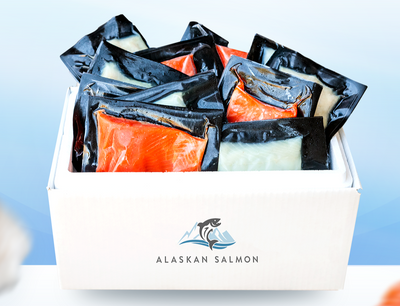
For pre-packaged salmon, the packaging itself can tell a story. Vacuum-sealed packs that are tight and free of excess liquid are generally a better sign of proper handling. Excess fluid inside the package often suggests breakdown of the flesh or extended storage.
Ice crystals inside the packaging can also indicate the fish has been thawed and refrozen, which affects both texture and quality.
At the end of the day, the most reliable choice often comes down to who you’re buying from, not just what the label says. I always encourage people to buy from suppliers who understand fish beyond the counter — people who can clearly explain how it was caught, handled, and preserved.
At Outerseas, we skip middlemen and focus on preserving quality from the moment the fish is harvested. Our salmon is flash-frozen within hours of the catch.
All of our fish is 100% wild-caught in pristine Alaskan waters, using sustainable, low-impact fishing practices designed to protect long-term ocean health while maintaining peak quality.
Forget Sushi Grade, Focus on Proper Handling and Freshness
Sushi grade is not a regulated food safety standard. It is a marketing term, not a classification recognized by the FDA or other U.S. food safety authorities, and it does not confirm how salmon was handled or whether it is safe for raw consumption.
From my experience as a commercial salmon fisherman, safety comes down to process — cold chain control, sanitary handling, and compliance with FDA-recognized safety measures such as validated freezing when required.
The FDA does not certify seafood based on labels. Instead, it relies on hazard control systems and measurable food safety practices throughout the supply chain.
In practice, the label matters less than whether a supplier can clearly explain how the fish was handled from harvest to counter. What matters is not the grade, but the process behind the fish.