You pay extra for wild salmon because you want the real thing. But what if the fillet in your cart isn't actually wild-caught?
Mislabeled salmon is more common than most shoppers realize. A study by the ocean advocacy group Oceana found that 43% of salmon samples collected from U.S. restaurants and grocery stores were mislabeled. Most of that mislabeling involved farmed Atlantic salmon being sold as wild-caught product.
So, is my salmon really wild-caught? Here's how to tell, what to ask, and what to look for before you buy.
Key Takeaways
- About 43% of salmon samples tested by Oceana were mislabeled, mostly farmed Atlantic salmon sold as wild
- Mislabeling is far more common in winter (43%) than summer (7%), according to separate Oceana surveys
- Always look for a specific species name on the label: king, sockeye, coho, pink, or chum
- Wild salmon has a deeper color and less visible fat than farmed
- Ask your seller where, when, and how the fish was caught
- Buying direct from a traceable source is the most reliable way to avoid fraud
Why Salmon Mislabeling Happens
Salmon fraud rarely happens by accident. A few things in the seafood industry make it easy for mislabeling to happen, and knowing what they are can help you spot it before it lands on your plate.
Three root causes drive the problem:
- Long, untracked supply chains where labels can be changed at any handoff
- A massive export gap that sends most U.S. wild salmon overseas, leaving shelves filled with cheaper farmed imports
- Seasonal scarcity that spikes fraud rates in winter, when fresh wild salmon is unavailable
The Supply Chain Problem
A salmon fillet can pass through four or five hands before it reaches your plate: fisherman, processor, distributor, wholesaler, retailer. Each handoff is a point where labels can be changed, lost, or made up. Currently, the U.S. has no comprehensive federal traceability requirement that follows a fish from the point where it was caught to your dinner plate.
The Export-Import Gap
American fishermen catch enough wild salmon each year to supply the majority of domestic demand. But according to Oceana, over 70% of that catch gets exported, often to be processed overseas. What fills the gap on U.S. shelves is mostly cheaper, imported farmed salmon, sometimes relabeled as wild-caught.
The Seasonal Squeeze
Wild salmon has a season. In Alaska, the commercial fishing season runs from roughly May through September, and outside of those months, fresh wild salmon is hard to come by. As NPR reported, the difference in fraud rates is dramatic: Oceana's summer survey found just 7% of samples mislabeled, while a separate winter survey put the rate at 43%.
For a closer look at how wild and farmed fish actually compare, see our guide on wild-caught vs. farmed seafood.
Telltale Signs of Farmed Salmon Sold as Wild
Knowing how to tell if salmon is really wild starts with a few visual and label-based clues. No single sign is a guarantee on its own, but together they give you a much better read on what you're actually buying. Here's what to look for at the store or the fish counter.
Check the Species Name
Wild Pacific salmon comes in five species. A label that just says "salmon" or "wild salmon" without naming one of them is a red flag. Oceana found that products listing a specific species were less likely to be mislabeled. Here are the five to look for:
- King (chinook), the largest and most expensive
- Sockeye (red), deep red-orange flesh, always wild
- Coho (silver), milder flavor, versatile for cooking
- Pink, lighter color, most commonly canned
- Chum (keta), mild taste, often used in processed products
One more label to watch for: "wild-caught Atlantic salmon." Wild Atlantic salmon populations in the U.S. are severely depleted and protected under the Endangered Species Act. Nearly all Atlantic salmon sold commercially is farmed, so that label should raise immediate questions.
Look at the Flesh
A few visual cues can help separate wild from farmed at the counter:
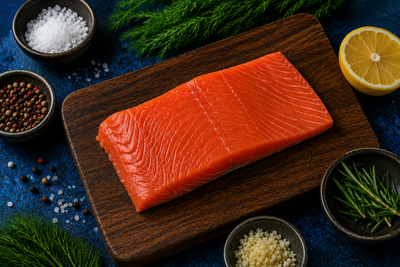
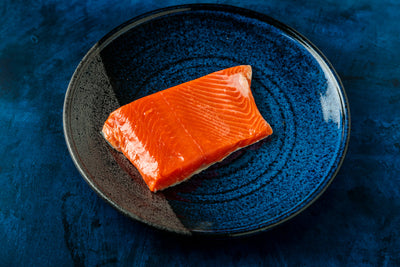
- Wild salmon typically has a deeper, more vibrant color. Sockeye should be a rich red-orange.
- Farmed salmon tends to have thicker white lines of fat running through the flesh, almost like a zebra pattern.
- "Color added" on the label indicates colorant was used in the fish's feed to mimic the look of wild fish.
Wild salmon gets its natural color from a diet rich in crustaceans containing carotenoids. Farmed salmon, fed on manufactured pellets, would look pale without added pigment. Not every wild species is deep red, though. Pink and chum salmon are naturally lighter, so color alone isn't a definitive test.
Watch the Price
Wild salmon costs more than farmed, and there's no way around that fact. Wild king salmon, for example, is one of the most prized and expensive species. If a deal on "wild king salmon" seems surprisingly cheap, the fish may not be what the label says. A simple rule: if the price seems too good to be true, it probably is.
Questions to Ask Any Seafood Seller Before You Buy
A quick conversation at the fish counter or restaurant can reveal a lot about whether your salmon is legitimately wild. Honest sellers are usually happy to answer. Here are good questions to start with:
- Where was the salmon caught?
- Was it wild-caught or farm-raised?
- What species is it?
- When was it caught?
- Has it been previously frozen?
Federal regulations under the Country of Origin Labeling (COOL) program require most grocery stores to display the country of origin and production method (wild or farmed) for fresh and frozen seafood. A seller who can't answer these questions might not know enough about their own fish.
One important seasonal clue is that nearly all wild salmon available during winter months has been previously flash-frozen. If someone is selling you "fresh wild-caught" salmon in January, that claim deserves real scrutiny.
How Traceability and Direct-from-Fisherman Sourcing Prevents Fraud
The mislabeling problem keeps coming back to one root issue: a supply chain that's too long and too opaque to police. When a fillet changes hands multiple times between the boat and your plate, each stop is a chance for labels to be swapped, and no federal system tracks whether they stay accurate.
Shortening that chain is the most direct way to fix it. When a company works directly with the crews catching the fish, the chain drops to two or three steps: fisherman, processor, customer. Fewer handoffs mean fewer chances for labels to go wrong.
Traceability matters because it answers the questions a label alone can't. A traceable fillet has a verifiable story behind it:
- Which port the fish came from
- Who caught it and on what boat
- When it was caught and what season
- How it was processed, packed, and shipped
When that information travels with the fish from water to doorstep, mislabeling becomes far harder to pull off.
Want to see what a short, transparent supply chain looks like in practice? Here's how we get wild seafood from Alaska to your door.
How to Verify a Brand's Wild-Caught Claim
Not every brand that says "wild-caught" can back it up. A few quick checks can tell you whether a brand's wild-caught claim is real.
- Can they name the source? A trustworthy brand should be able to tell you where their fish was caught, down to the region or port.
- Do they name the species? Vague terms like "wild salmon" without specifying king, sockeye, or coho leave room for ambiguity.
- Is the supply chain transparent? Look for clear information about how the fish gets from boat to your table. Brands with nothing to hide are usually happy to show their process.
- Are there third-party certifications? The MSC (Marine Stewardship Council) blue label confirms wild-caught from a sustainable fishery. According to the Marine Stewardship Council, over 62% of the global wild salmon catch is currently MSC certified.
- Do they sell direct? Brands that sell directly to consumers and bypass the traditional four-to-five-hand supply chain put you closer to the people actually catching your fish.
Once you've found wild salmon you trust, proper storage keeps it at its best. Here's how to tell if salmon has gone bad.
Conclusion
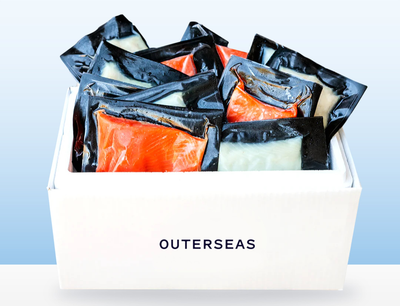
How to avoid mislabeled wild salmon comes down to asking the right questions, knowing what to look for, and choosing a source you can verify. At Outerseas, every fillet is wild-caught in Alaska and traceable from boat to box, with no farms, no shortcuts, and no middlemen.
Just honest seafood from real fishermen you can trust.
FAQs
How can I tell if salmon is really wild-caught?
Look for a specific species name on the label, such as sockeye, king, coho, pink, or chum. Wild salmon typically has a deeper color and thinner fat lines than farmed. If the label says "Atlantic salmon," the fish is almost certainly farmed, since wild Atlantic salmon is commercially unavailable in the U.S.
What percentage of salmon is mislabeled in the U.S.?
A 2015 study by Oceana found that 43% of salmon samples from U.S. grocery stores and restaurants were mislabeled. Most of the mislabeling involved farmed Atlantic salmon sold as wild-caught product. Mislabeling rates were significantly higher in restaurants (67%) than in grocery stores (20%).
Is "wild-caught Atlantic salmon" real?
Probably not. Wild Atlantic salmon populations in the U.S. are severely depleted and protected under the Endangered Species Act. Nearly all Atlantic salmon sold in American stores and restaurants is farm-raised. A label that claims "wild-caught Atlantic" should be treated as a major red flag.
When is the best time to buy wild salmon?
The Alaskan commercial salmon season runs roughly from May through September. Purchasing during or shortly after these months reduces your risk of getting mislabeled fish. Oceana's data showed mislabeling dropped to just 7% during summer but rose to 43% in the winter off-season.
Does frozen salmon mean lower quality?
Not at all. Most wild Alaskan salmon is flash-frozen on or near the boat within hours of being caught. Freezing at peak freshness locks in flavor and texture better than letting fish sit on ice for days. In many cases, frozen wild salmon is actually fresher than a thawed "fresh" fillet at the counter.
What certifications should I look for when buying salmon?
The MSC (Marine Stewardship Council) blue label confirms that salmon is wild-caught from a certified sustainable fishery. For farmed salmon, the ASC (Aquaculture Stewardship Council) label indicates responsible farming practices. Either certification adds a layer of verification beyond what the store label alone provides.
Sources:
- Oceana: Mislabeling of America's Favorite Fish, Salmon (2015), 43% mislabeling rate, 69% farmed-as-wild swap, restaurant vs. grocery data
- Oceana CEO Note: Seafood Fraud in America's Favorite Fish (2015), 70% of U.S. wild salmon catch exported, 80% domestic demand figure
- NPR: That Salmon on the Menu Might Be a Fraud, Especially in Winter (2015), no federal traceability requirement, seasonal fraud data
- USDA: Country of Origin Labeling for Fish and Shellfish, COOL program requirements for grocery stores
- Marine Stewardship Council: Wild Salmon, 62.4% of global wild salmon catch MSC certified
- NOAA Fisheries: Atlantic Salmon (Protected), ESA listing, Gulf of Maine population status